The first batch of trees we are going to cover in our Seeing the Trees Through the Forest series will be covering different species of White Oaks. We’re covering Oaks first as they are a massive source of food for wildlife in the Eastern Deciduous forests and can be vital information to know where oak trees are for someone interested in hunting these forests.
White Oaks produce acorns that are a preferred food source for many forest inhabitants, some species of acorn more than others. Consider any acorn producing tree a food source for game animals including white-tailed deer and bear. Low foliage is also a source of browsing for white-tailed deer and rabbits. Porcupine have been noted to feed on the bark of Oak trees. 1
White Oak acorns can be eaten by humans raw or cooked. Most species have tannins that should be leached out to improve the flavor. Leaching can be done by thoroughly washing the dried and ground up seed in water. 2
White Oak – Quercus Alba
White Oak has a light gray, scaly and rough looking bark. Branches often angle upward at small angles relative to the trunk. Lives around 600 years. Can be found in a wide array of habitats but absent from poorly drained, very wet sites. 1

Photo © Ken Kneidel
Public Domain
White Oak Leaves have a wedge shaped base to the stem, 7-9 round tip lobes per leaf and deep sinuses between lobes. Leaves do not have any hair or fuzzy texture. Veins are mostly straight at about a 45 degree angle off the mid rib. Reddish Brown foliage in the fall. 1
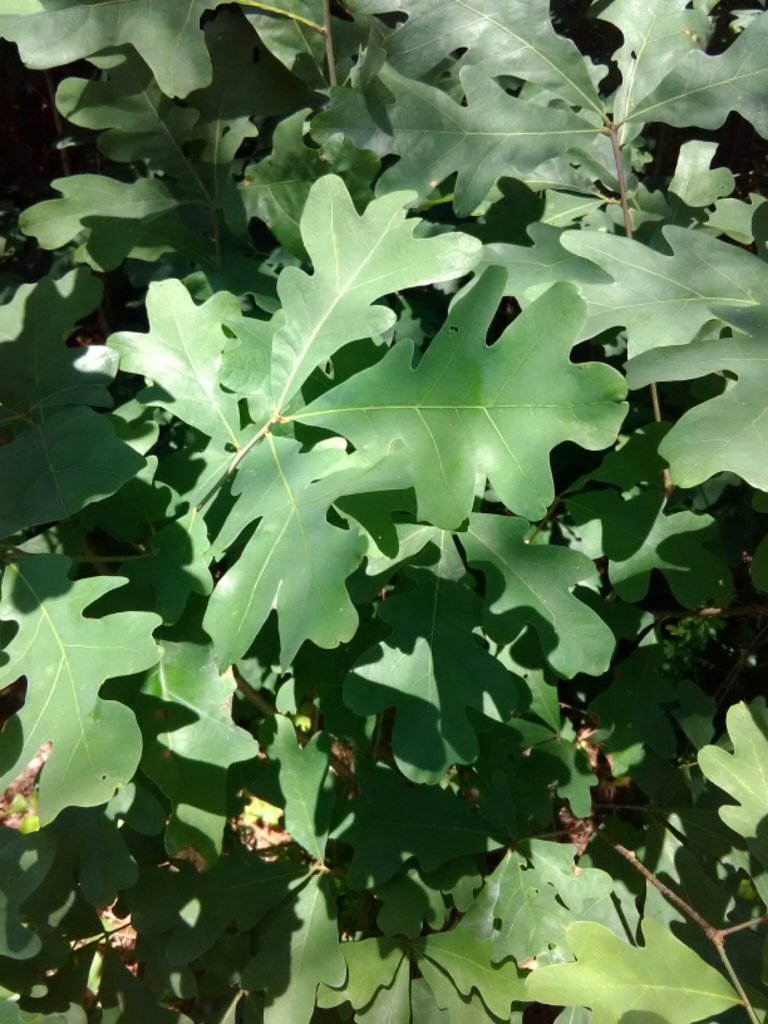
Photo © Claire Secrist
Public Domain
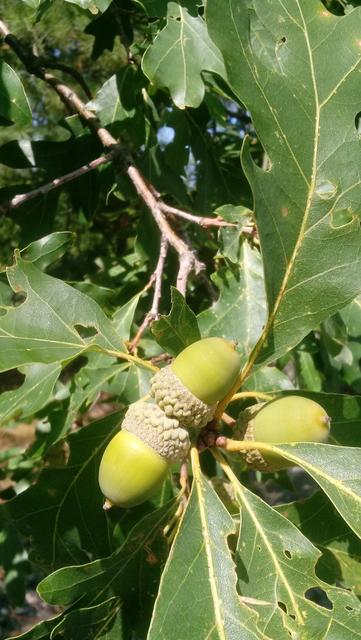
White Oak Acorns are oblong with a cap covering about 1/4 of the acorn. Produces acorns after about 50 years old. 1
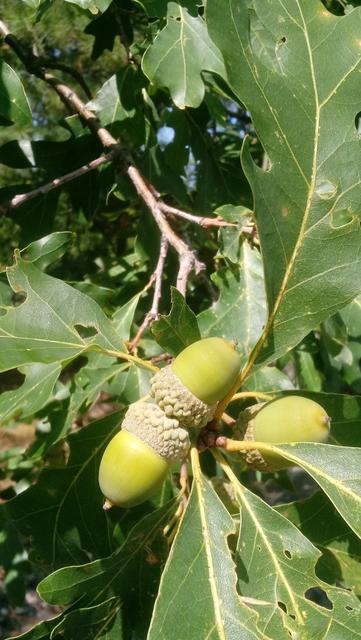
Photo © Ken Kneidel,
Public Domain
Swamp White Oak – Quercus Bicolor
Swamp White Oak has gray bark that can be scaly but usually has longer ridges than White Oak. Young branches have peeling bark. Lives around 300-350 years. Found in forested wetlands, around the edges of swamps and in poorly drained sites. 1
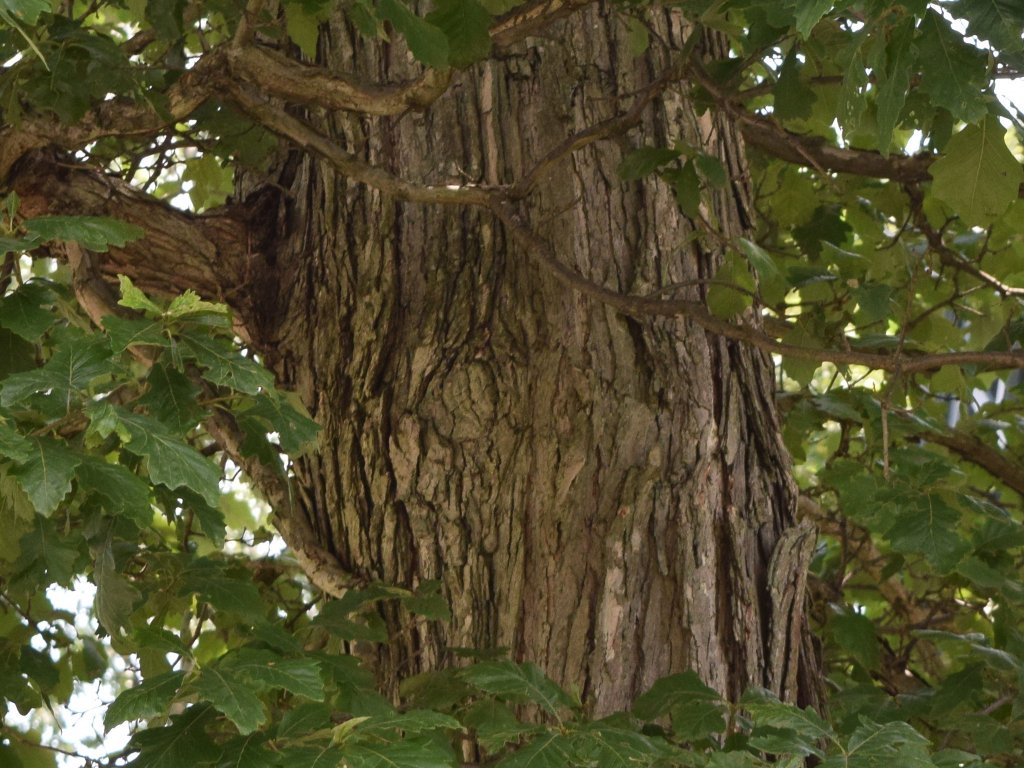
Photo © Alex Zorach
CC BY-SA 4.0
Swamp White Oak leaves have a shallow sinus between lobes. Lobes may be rounded or come to a point. Glossy, Dark green on top, paler whitish with a soft fuzz underneath. Veins are mostly straight at about a 45 degree angle off the mid rib. Golden Yellow foliage in the fall. 1
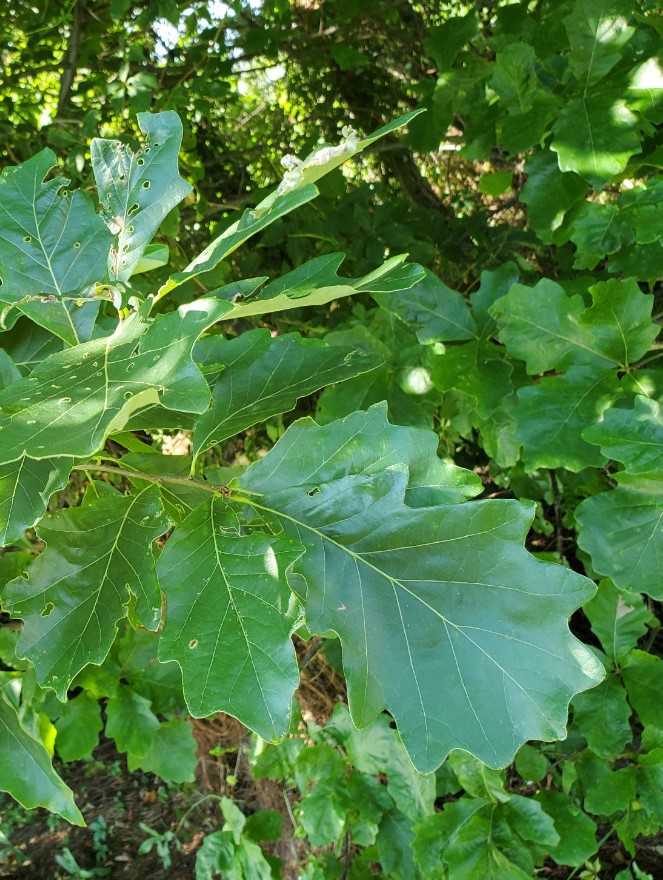
Photo © Alex Zorach
CC BY-SA 4.0
Swamp White Oak Acorns are more rounded and have a cap that covers 1/2 – 3/4 of the acorn. Acorn caps have a slightly ‘spiky’ texture. Produces acorns around 20-30 years old. 1
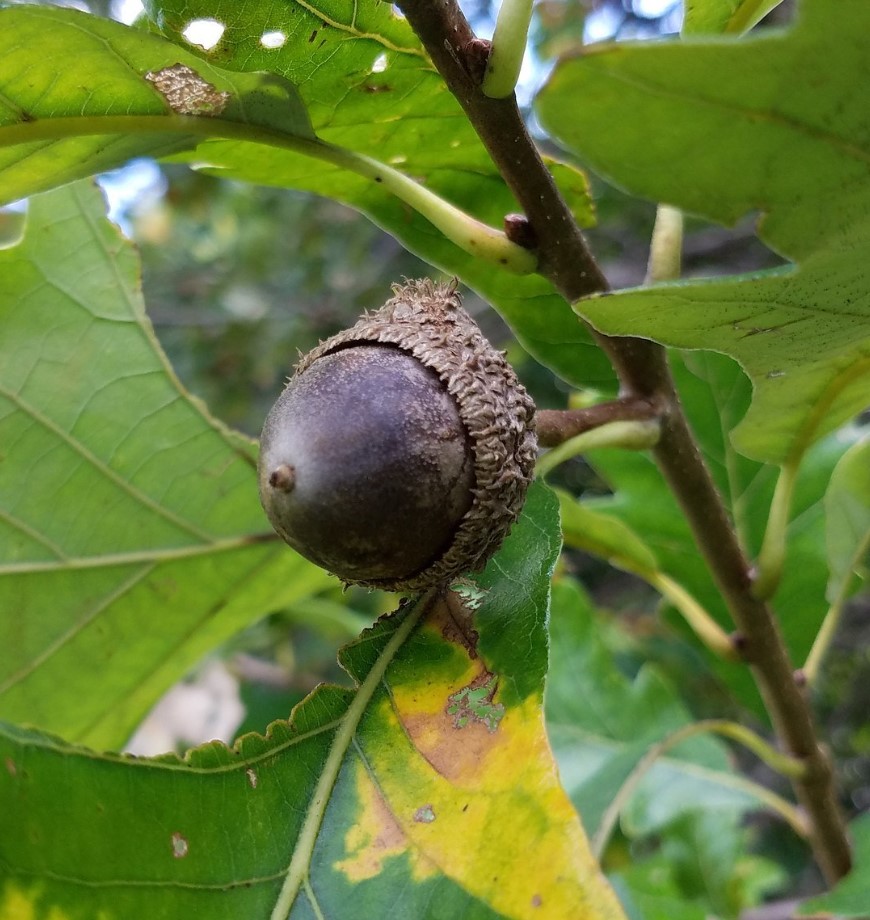
Photo © Dan Keck
Public Domain.
Bur Oak – Quercus Macrocarpa
Bur Oak have a rugged, dark gray bark with long ridges and deep grooves. Large branches high in the tree can make abrupt angles relative to the trunk. Lives around 400 years. Found in a wide range of habitats, cold and drought tolerant. 1
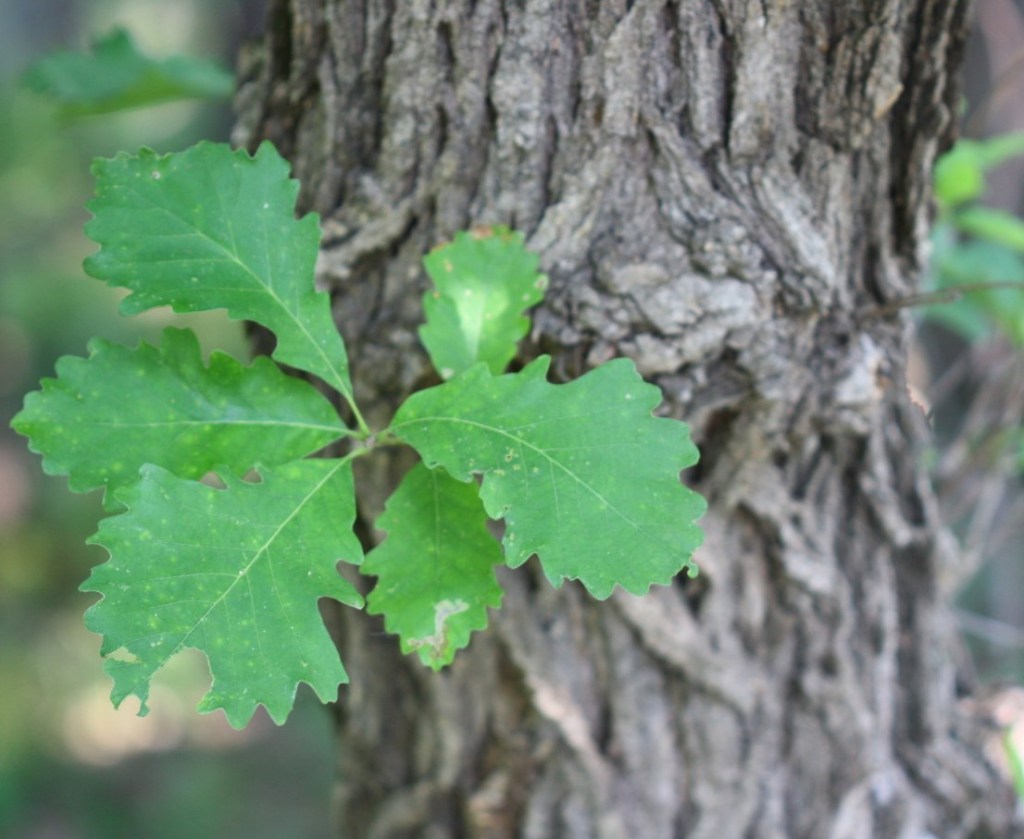
Photo © Scott Loarie
Public Domain.
Bur Oak leaves usually have quite a few lobes and side veins that start at an acute angle off the mid rib and curve out to a more perpendicular angle. General appearance is variable however. Leaves exposed to more sunlight can have deep sinuses while leaves in shade have shallower sinuses. Underside has small hairs that give a velvet feel but are not very visible. Muted yellow foliage in the fall. 1
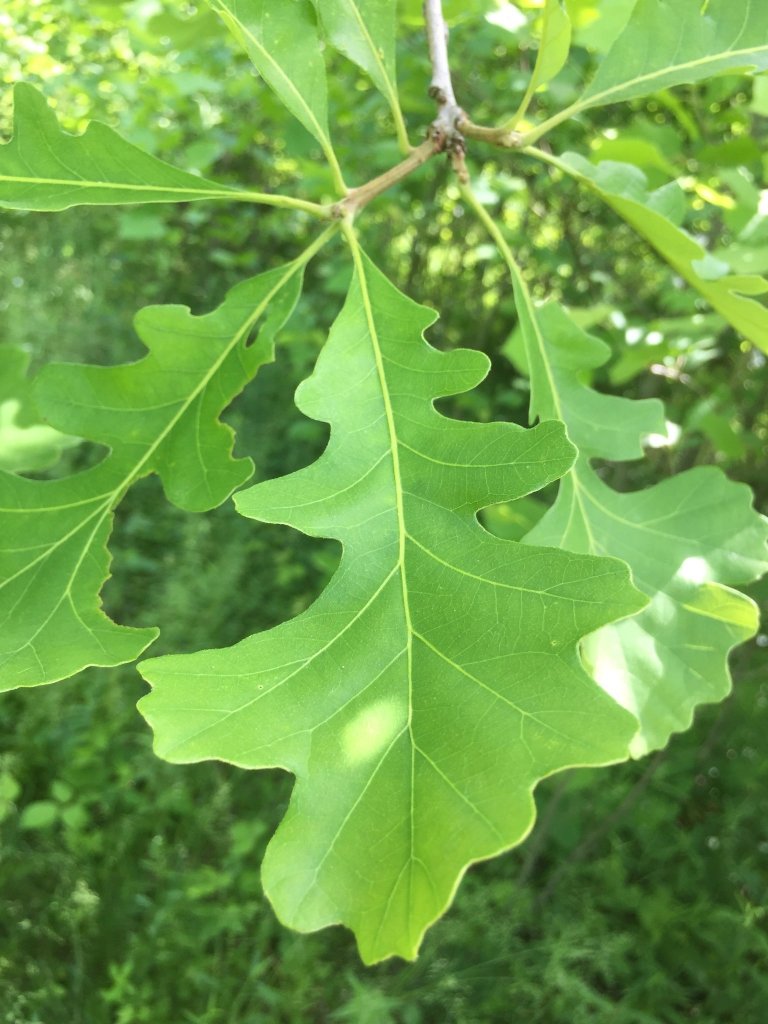
Photo © askalotl
Public Domain.
Bur Oak Acorns have a cap that covers most of the acorn, often more than half, sometimes almost all of the acorn. Caps have a mossy appearance, acorns can have more than one seed inside. Produces acorns at about 35 years old. 1
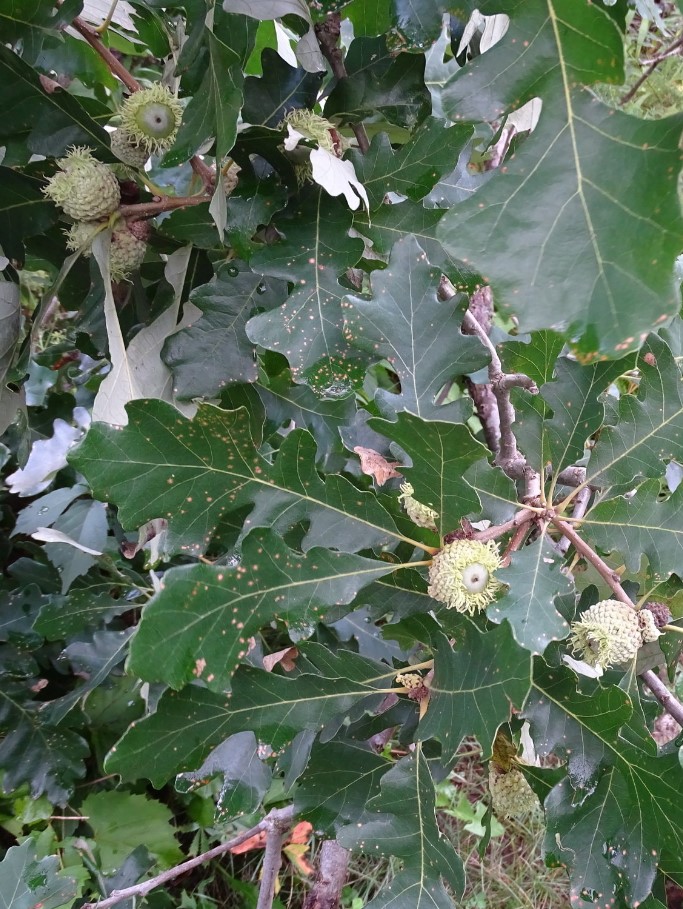
Photo © Reuven Martin
Public Domain.
Chestnut Oak – Quercus Montana
Chestnut Oak have rugged bark with thick vertical ridges, and many horizontal cracks. Lives around 300-400 years. Found in wooded slopes in upland areas and along ridges in dry sandy soils. 1

Photo © Andrew Conboy
CC BY 4.0.
Chestnut Oak leaves have many veins and lobes that are close together, with very shallow sinuses. Lobe tips are rounded and angling outward. The leaves have very small hairs on the bottom. Yellow brown, red brown foliage in the fall. 1
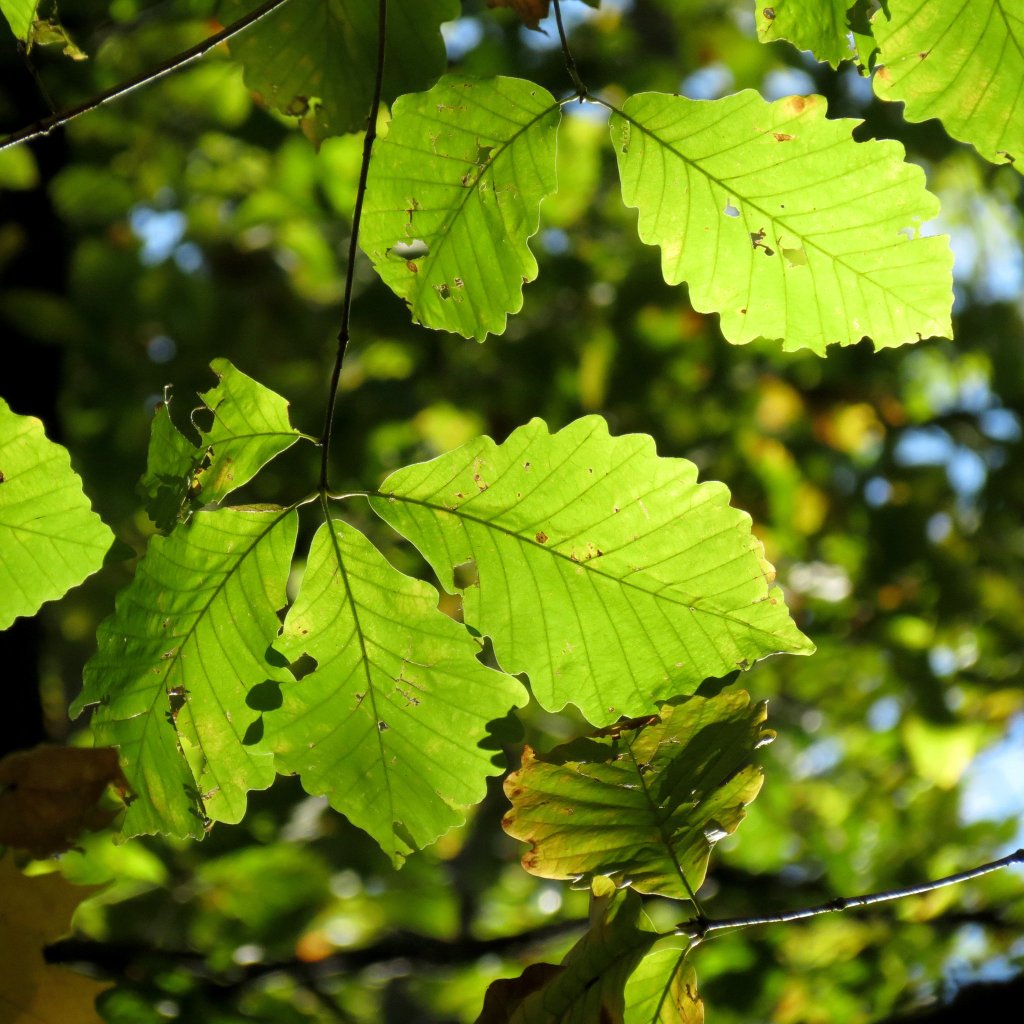
Photo © Katja Schulz
CC BY 4.0.
Chestnut Oak Acorns have a thin cap, tapered at the base, oval shaped. Chestnut Oak produces acorns after about 20 years old. 1

Photo © Katja Schulz
CC BY 4.0.
Chinquapin Oak (Yellow Oak) – Quercus Muehlenbergii
Chinquapin Oak, Yellow Oak, or Chinkapin Oak have scaly gray bark that breaks up into flat-topped plates. Can live 100-200 years. Found in dry rocky sites in deep, well drained soils. 1

Photo © Katja Schulz
CC BY 4.0.
Chinquapin Oak leaves have many veins and lobes that are close together, with very shallow sinuses. Lobe tips are pointed and angling forward. Small hairs on the bottom of the leaves. Yellow, Orange-Brown foliage in the fall. 1
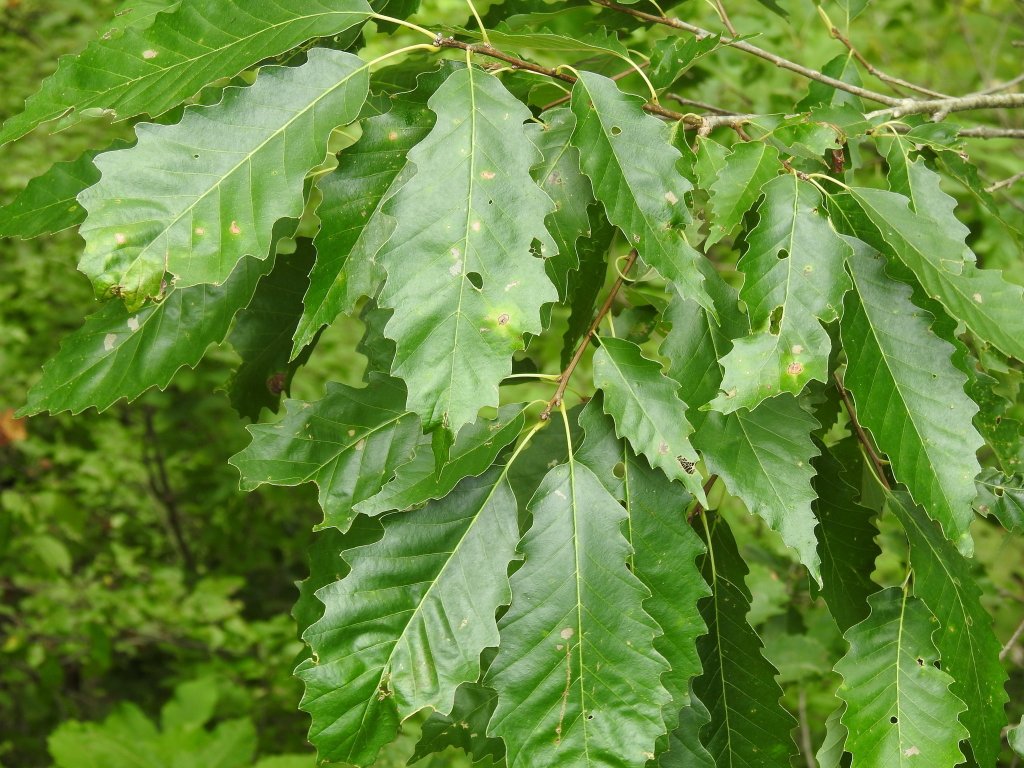
Photo © Yann Kemper
Public Domain.
Chinquapin Oak Acorns have a flat cap, that covers about 1/3 of the acorn. Round, egg shaped acorn with a broad tip. Chinquapin oaks produce acorns around 20 years old. 1

Photo © Doug Goldman
CC BY 4.0.
Post Oak – Quercus Stellata
Post Oak often look gnarled or shrubby with a broad, dense crown. Post Oak bark is similar to White Oak bark, but a bit darker with more defined vertical ridges. Post Oak trees live around 400 years in dry, nutrient poor sites. 1

Photo © Elaine Wolshock
CC BY 4.0.
Post Oak leaves are leathery in texture and fuzzy underneath, dark green and shiny. Leaves are cross shaped with center lobes having a rectangular shape. Golden brown foliage in fall. 1

Photo © Michael Ellis
CC BY 4.0.
Post Oak acorns have a cap that covers about half of the acorn with scales that give the cap a slightly spiky appearance. Post Oaks produce acorns after about 25 years. 1
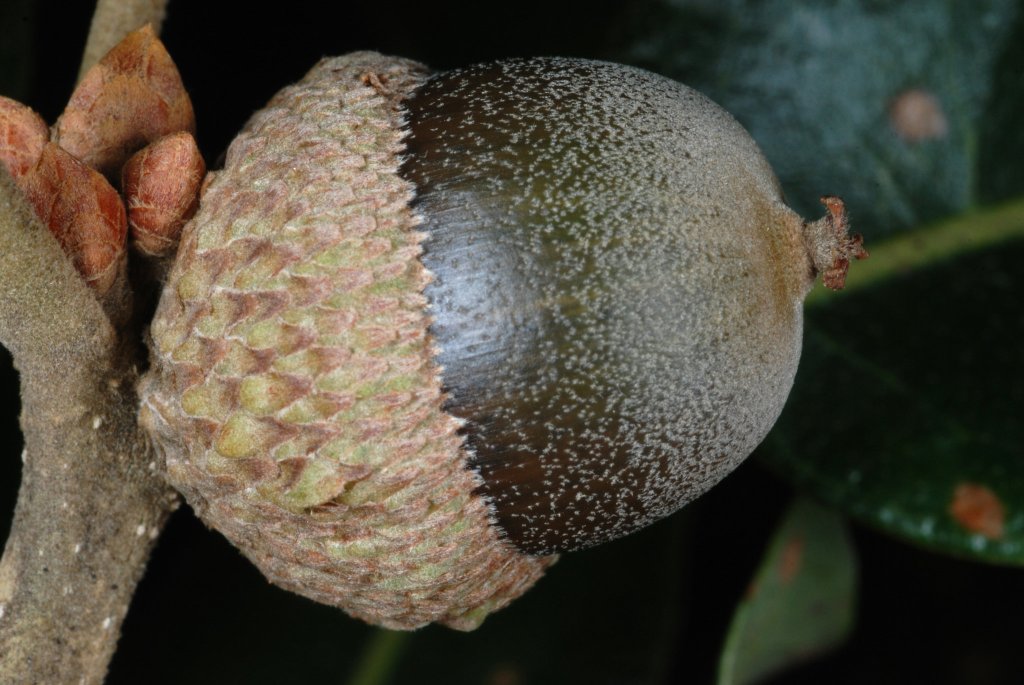
Photo © Doug Goldman
CC BY 4.0.
Dwarf Chinquapin Oak – Quercus Prinoides
Dwarf Chinquapin Oak is a thicket forming shrub with sprawling growth habits. Fast growing species found mostly on barren, dry acidic sites. 1
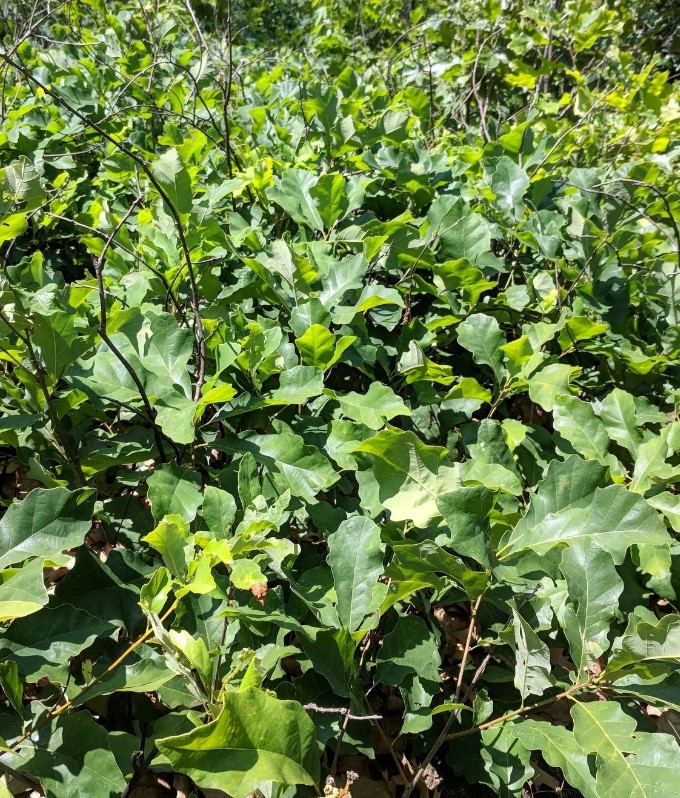
Photo © Nate Martineau
CC BY 4.0.
Dwarf Chinquapin Oak leaves are very similar but smaller than Chinquapin Oak with fewer lobes and rounded lobes. 1
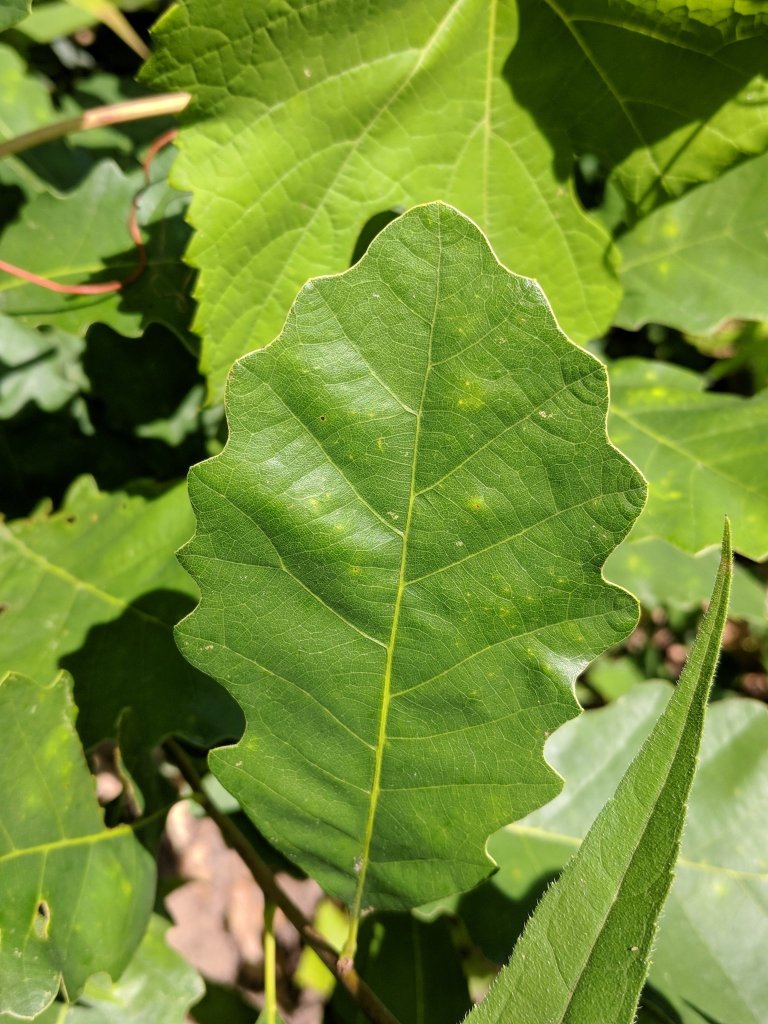
Photo © Nate Martineau
CC BY 4.0.
Dwarf Chinquapin Oak Acorns have a cap covering about half of the acorn. 1
Citations: (View Citation Page links)
 Wild Heritage Horizons
Leave a comment