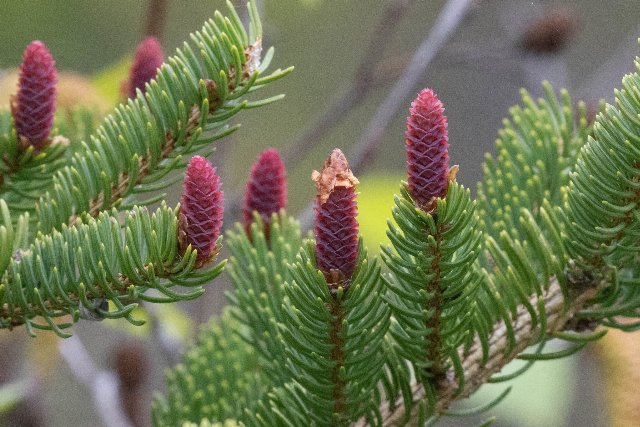
The next group of trees we are going to cover in our Seeing the Trees Through the Forest series will be transitioning to some Coniferous trees and covering different Spruce Trees.
Spruce shoot tips are rich in vitamin C and can be used to make teas, spruce beer and syrups.2
Spruce Trees can offer great habitat for small game animals, birds and rodents feed on the seeds. While most large game animals typically ignore Spruce for food sources, they can offer great thermal cover.
Norway Spruce – Picea Abies
Norway Spruce has upper branches that are curved upward. The dark green foliage appears to ‘droop’ off the limbs with a slightly round, broad crown.
Introduced into the United States, Norway Spruce can be found in cool, humid conditions on a wide range of soil conditions. Norway Spruce can be found in areas warmer than where native spruces can survive and is typically only established in areas where it has been widely planted.
Norway Spruce rarely reach 200 years old in North America and produces seeds after about 30-40 years.
The lumber of Norway Spruce is typically not widely sought after and is primarily used as pulp. The bark contains a tannin that has been used for tanning leather. Used in landscaping.
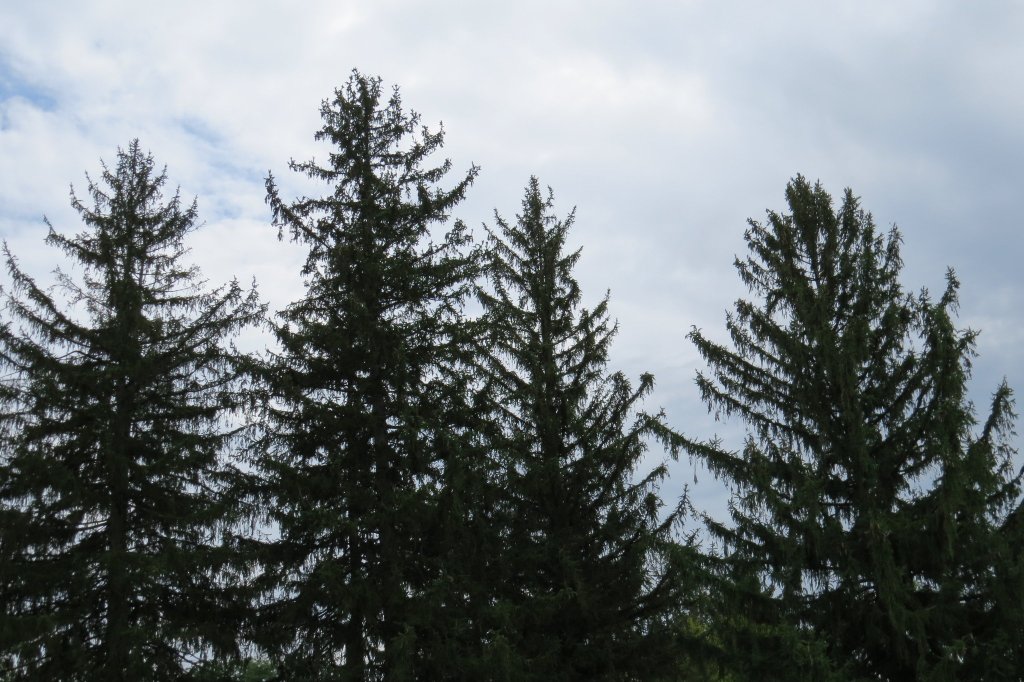
Photo © johnyochum
CC BY 4.0.
The bark of mature Norway Spruce is scaly, cracking into roughly round scales.
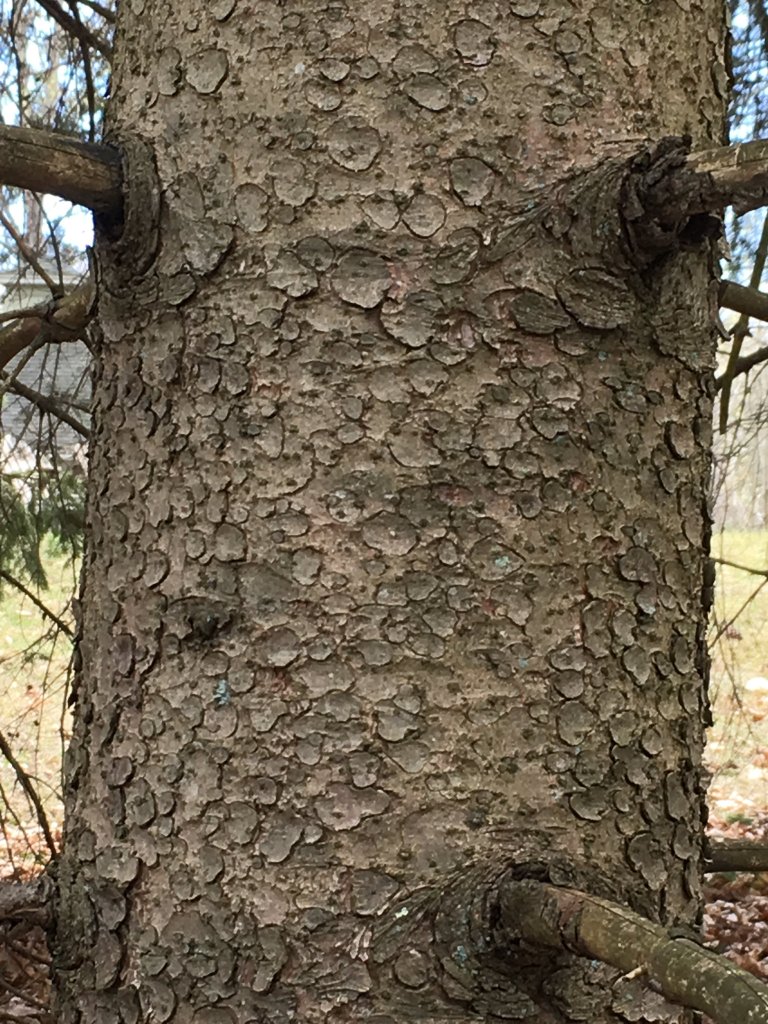
Photo © Marie Studer,
CC BY 4.0.
Norway Spruce has relatively long needles that grow almost perpendicular to the twig.

Photo © Mark Apgar,
CC BY 4.0.
Norway Spruce has long cones, around 4.5 – 6.5 inches, with notches at the apex of the scales.

Photo © Derek
CC BY 4.0.
White Spruce – Picea Glauca
White Spruce has upper branches that curve upward. Pale bluish green foliage is upright on branches. Pointy crown with a more narrow base of the tree.
White Spruce is one of the most northerly tree species, and is able to survive in harsh conditions. Tends to occur on richer, well-drained soil sites. More commonly found in drier areas to the west and northwest of its range but can be common on the northeast coastline.
Trees typically live 100 to 250 years. One tree, growing north of the Arctic circle, was recorded living over 1000 years. Produces good quantity of seeds after 30 to 40 years but can produce isolated cones as young as 4 years old.
Used in landscaping, where it is valued as being attractive and dense for a windbreak. Wood is typically used for pulp and lumber as it has a workable, straight-grained and relatively denser wood than most conifers.
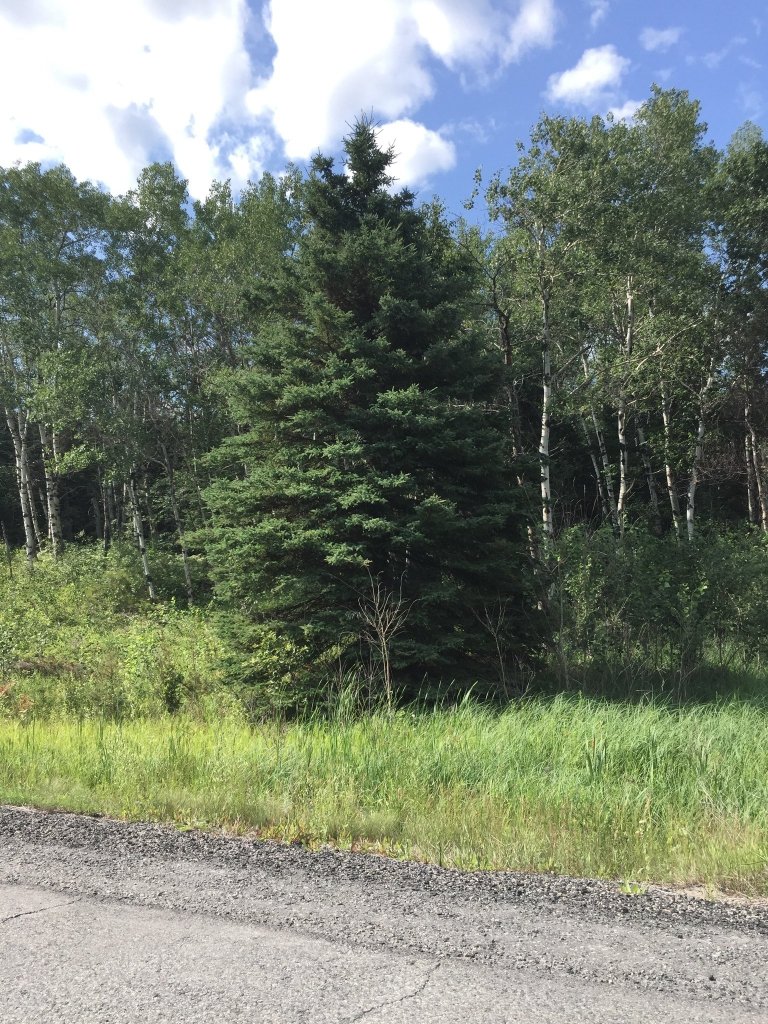
Photo © Mary Krieger,
CC BY 4.0.
Scaly pale bark. Bark of mature trees shows significant vertically-oriented cracks.
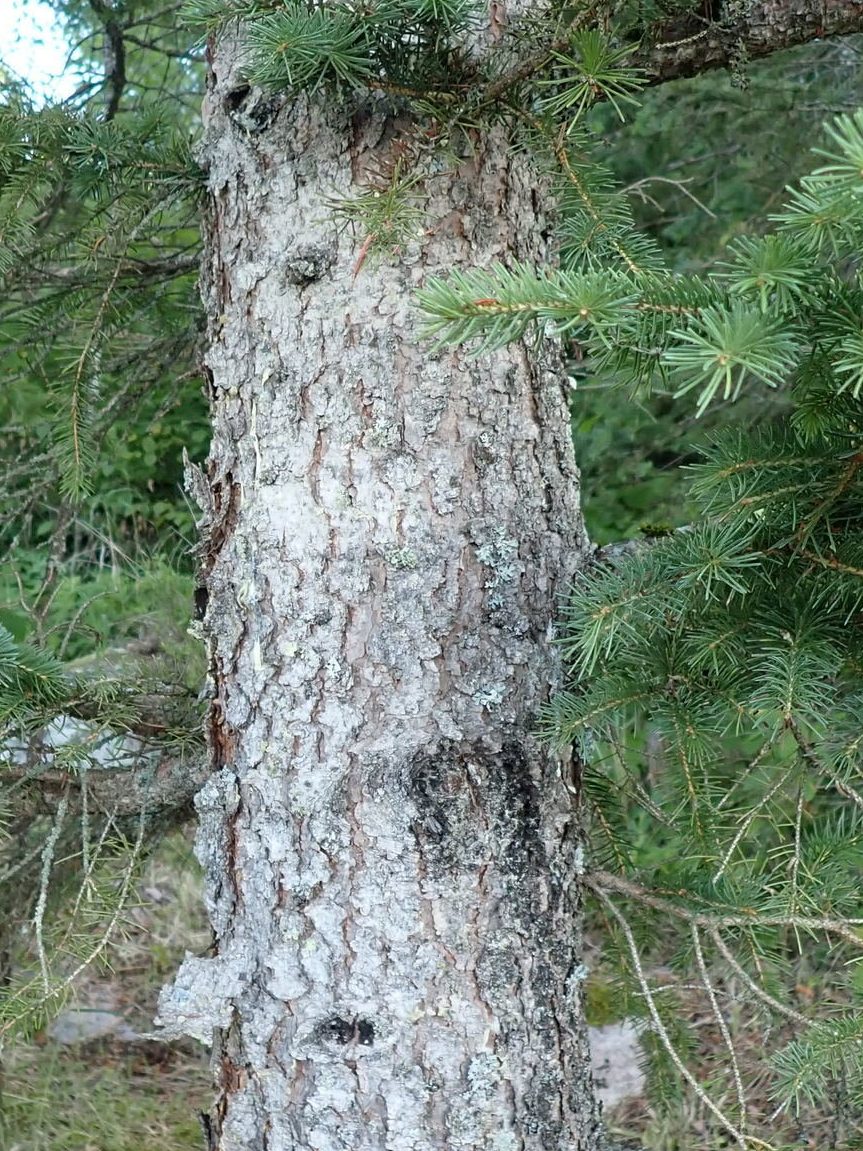
Photo © Mary Krieger,
CC BY 4.0.
Light green-blue with powder like coating that grows angled toward the direction of the twig, twig pale and hairless.
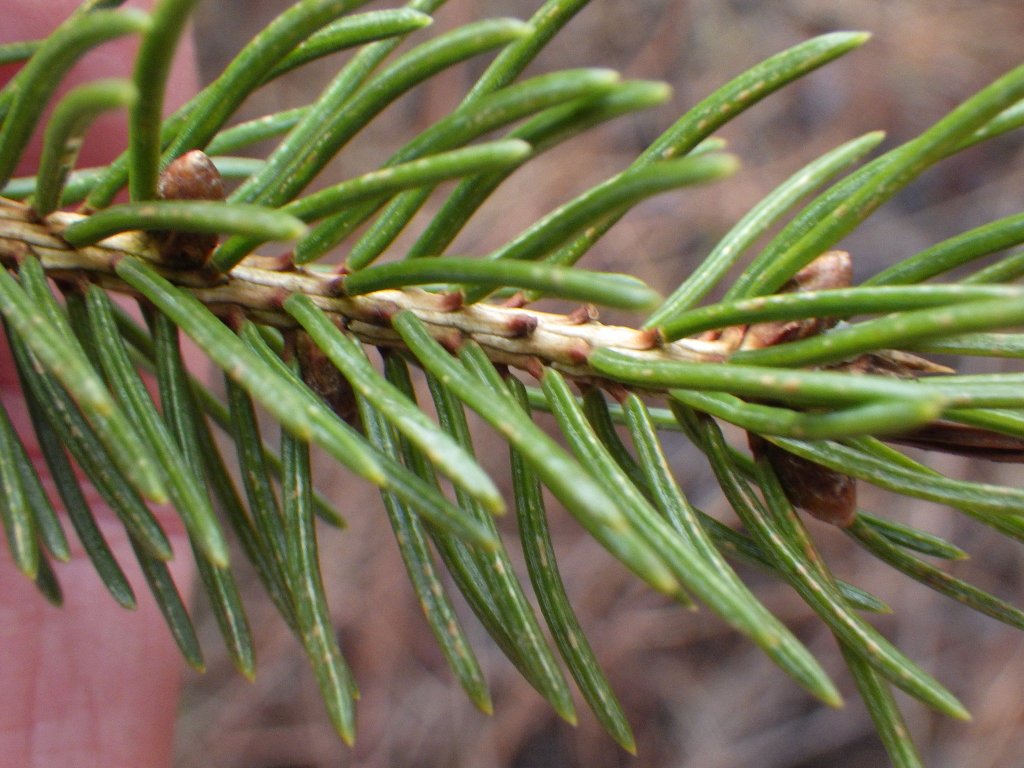
Photo © Ben Armstrong,
CC BY 4.0.
Shorter cones 1 – 2.5 inches with smooth round scales longer relative to width.
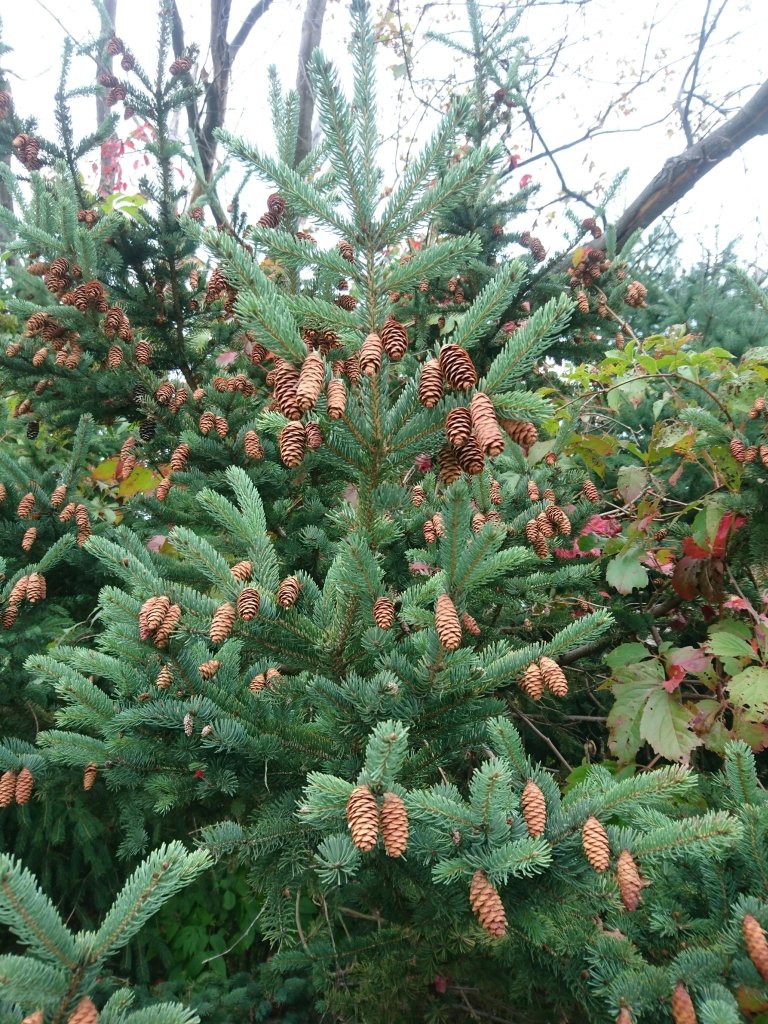
Photo © Shawn Treelife,
Public Domain.
Black Spruce – Picea Mariana
Black Spruce has a sparse, top heavy, growth loses most lower branches with little foliage except at the crown.
Black Spruce is found in a wide range, where other species can not live. Common on poorly drained sites. Peatland and bogs. Tends to occupy sites where white spruce is absent.
Black Spruce can live around 150 – 200 years. Produces seeds after 10 years on favorable sites, but typically after 30 years.
Black Spruce can be used as pulpwood, as it is typically too small to be used for anything else.
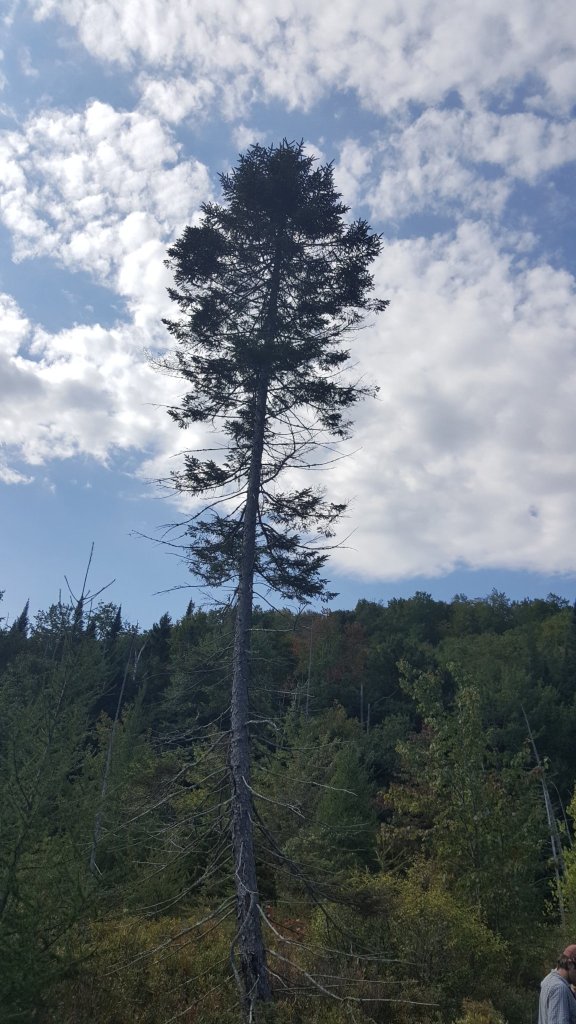
Photo © Charlie Hohn,
CC BY 4.0.
Black Spruce bark trees scaly, showing more vertically-oriented features. Usually darker in color.

Photo © Derek
CC BY 4.0.
Black Spruce needles are shorter and bluish, darker and brown buds. Twigs are hairy and yellowish in color.
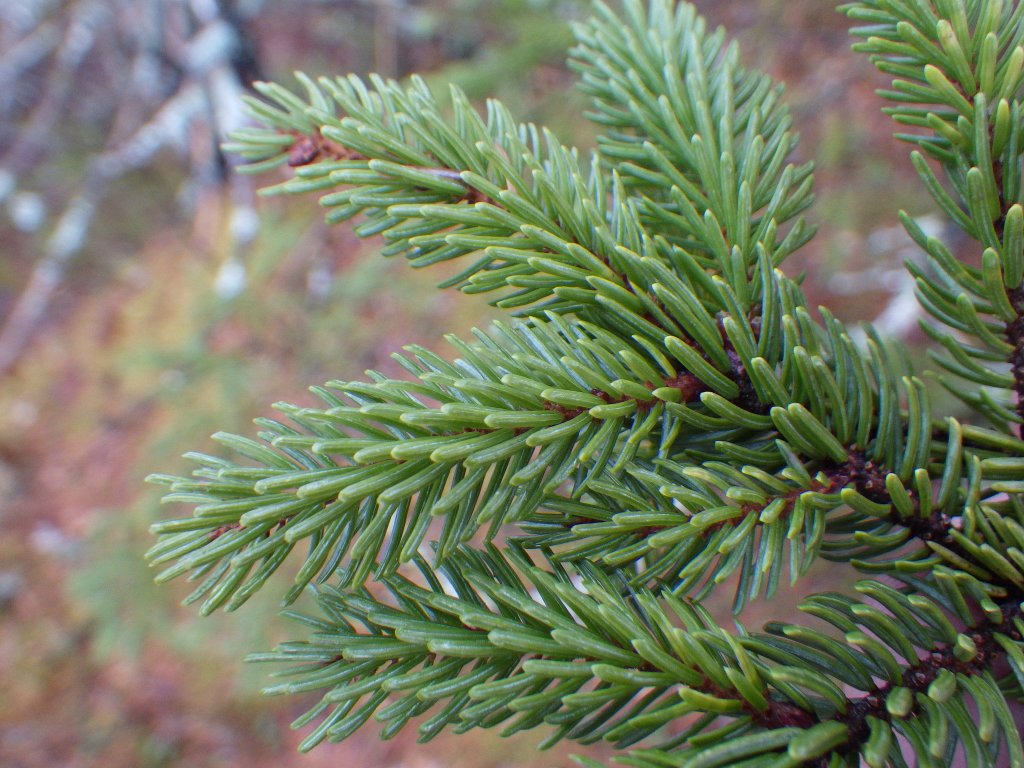
Photo © Ben Armstrong,
CC BY 4.0.
Smaller cones .5 – 1.5 in, unripe cones dark purple in color. Some cones retain on the tree for years.
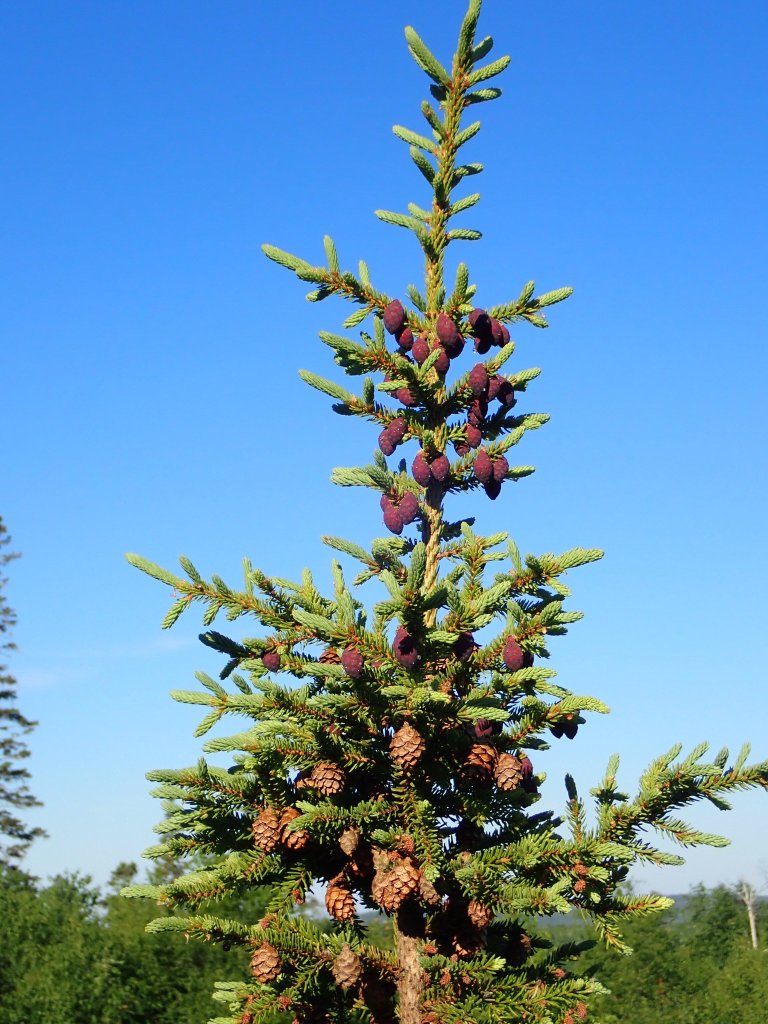
Photo © Rob Foster,
CC BY 4.0.
Blue Spruce (Colorado Spruce) – Picea Pungens
Blue Spruce is the most southerly spruce native to North America, found in the rocky mountains, but is also widely planted in landscaping.
Blue Spruce can live over 200 years, and typically produces seeds after 20 years.
Blue Spruce is used in landscaping as attractive windbreaks. The wood is brittle and can have many knots.

Public Domain Dedication (CC0)
Bark of mature trees gray and slightly more furrowed (with longer vertical cracks). A red color may be observed but usually limited to inner layer only visible in cracks.
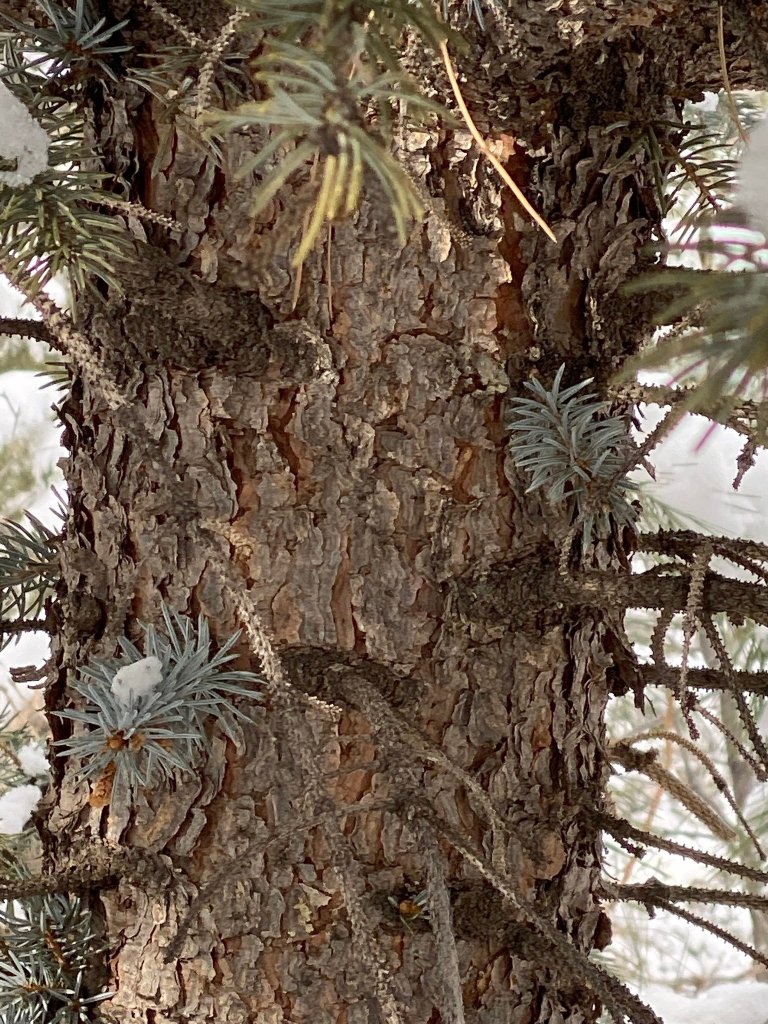
Photo © Tamberly Conway,
CC BY 4.0.
Blue Spruce Needles are blue gray, very sharp and stiff grow almost perpendicular to the twig, with no hair on the twig.
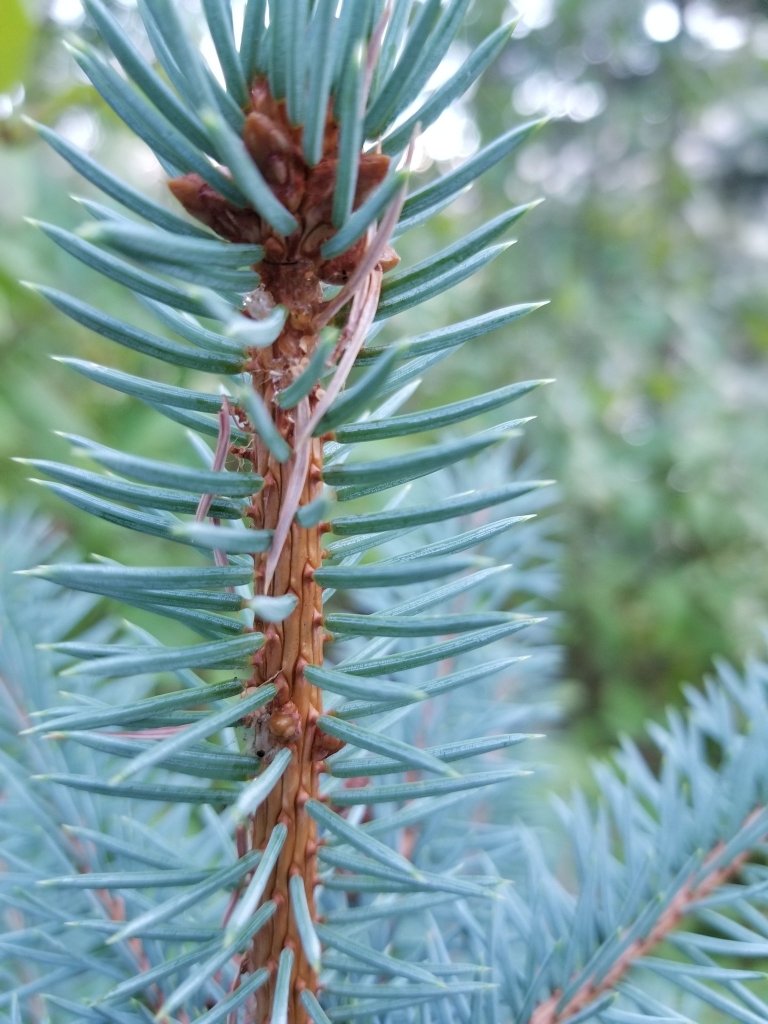
Photo © Rod,
Public Domain.
Blue Spruce cones are longer compared to the width 2.5 in – 5 in. Paler brown cones with a notched apex.
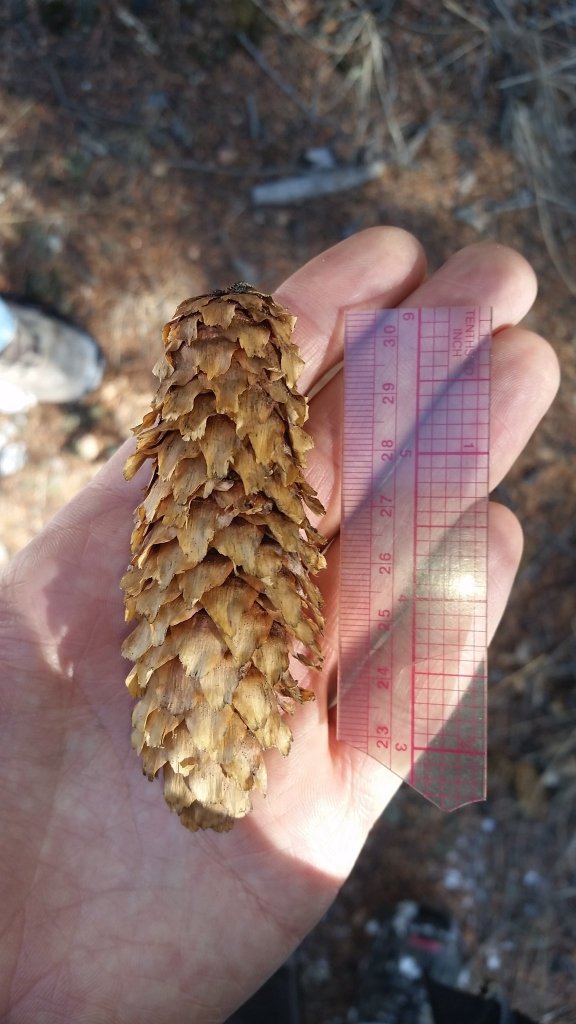
Photo © aiwendil
Public Domain.
Red Spruce – Picea Rubens
Upper branches horizontal with sturdy foliage, neat and spiky in appearance with a narrow conical crown. Rich Green to yellowish foliage.
Red Spruce is able to grow at higher elevations and in rougher conditions than other trees. This tree live can around 350 years, and typically produces seeds after 15-20 years, when the crown of the tree reaches direct sunlight.
Red Spruce is rarely used in landscaping, the wood can be used in construction pulpwood and paper production, but is usually knotty. Red Spruce can be used as soundboards for musical instruments.
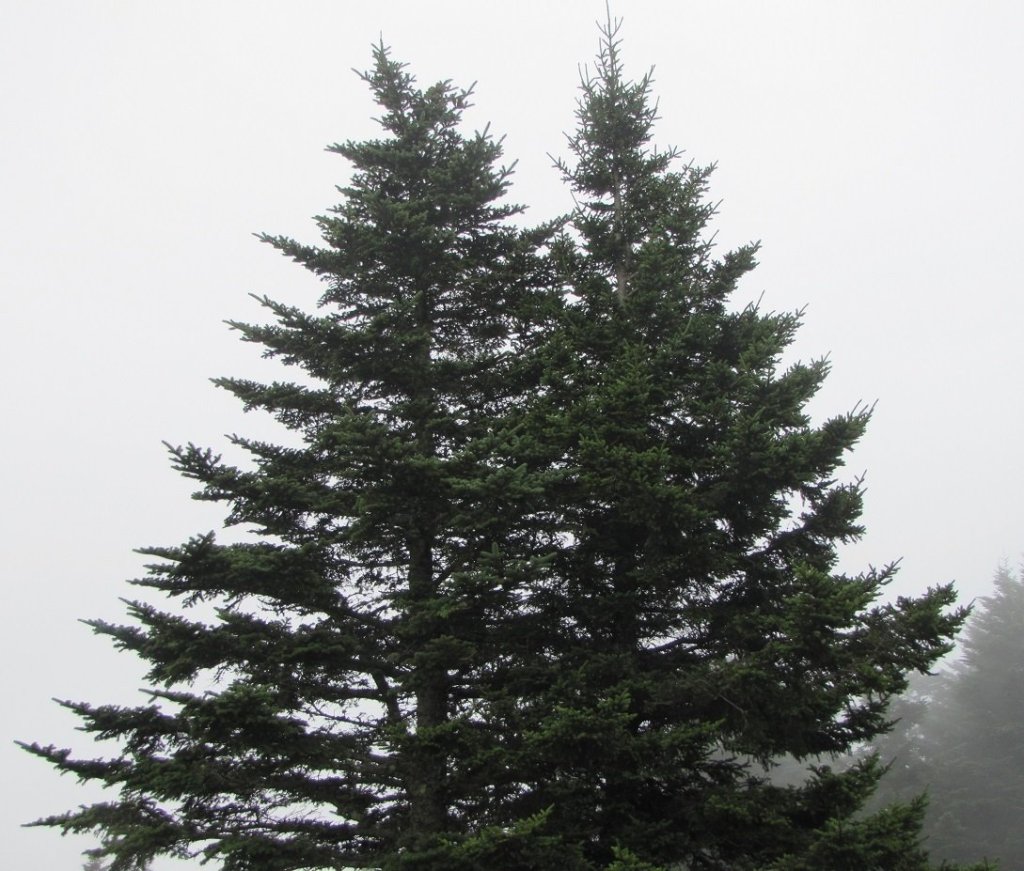
Photo © Ken Kneidel
Public Domain.
Red Spruce needles grow at an angle toward the direction of the twig growth. Twigs are “hairy”.

Photo © charlie
CC BY 4.0.
Red Spruce has small cones around 1.5 inches and are shorter relative to width.
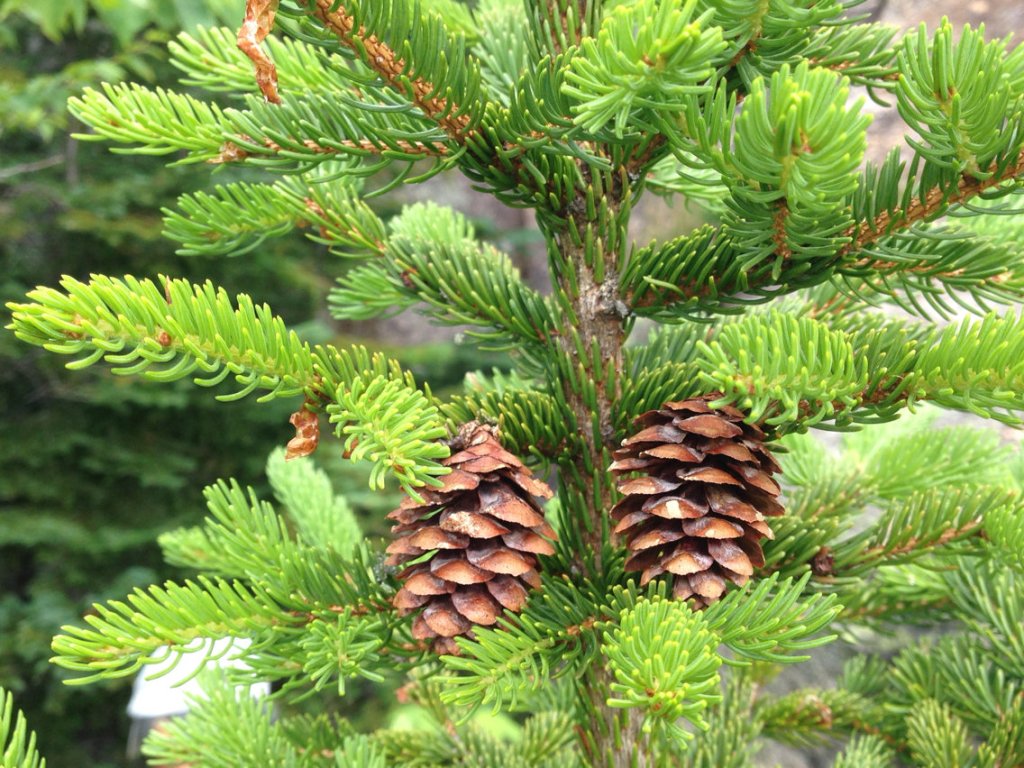
Photo © Ken-ichi Ueda
CC BY 4.0.
Citations: (View Citation Page links)
 Wild Heritage Horizons
Leave a comment